

NICHOLAS WARD
NICHOLAS WARD
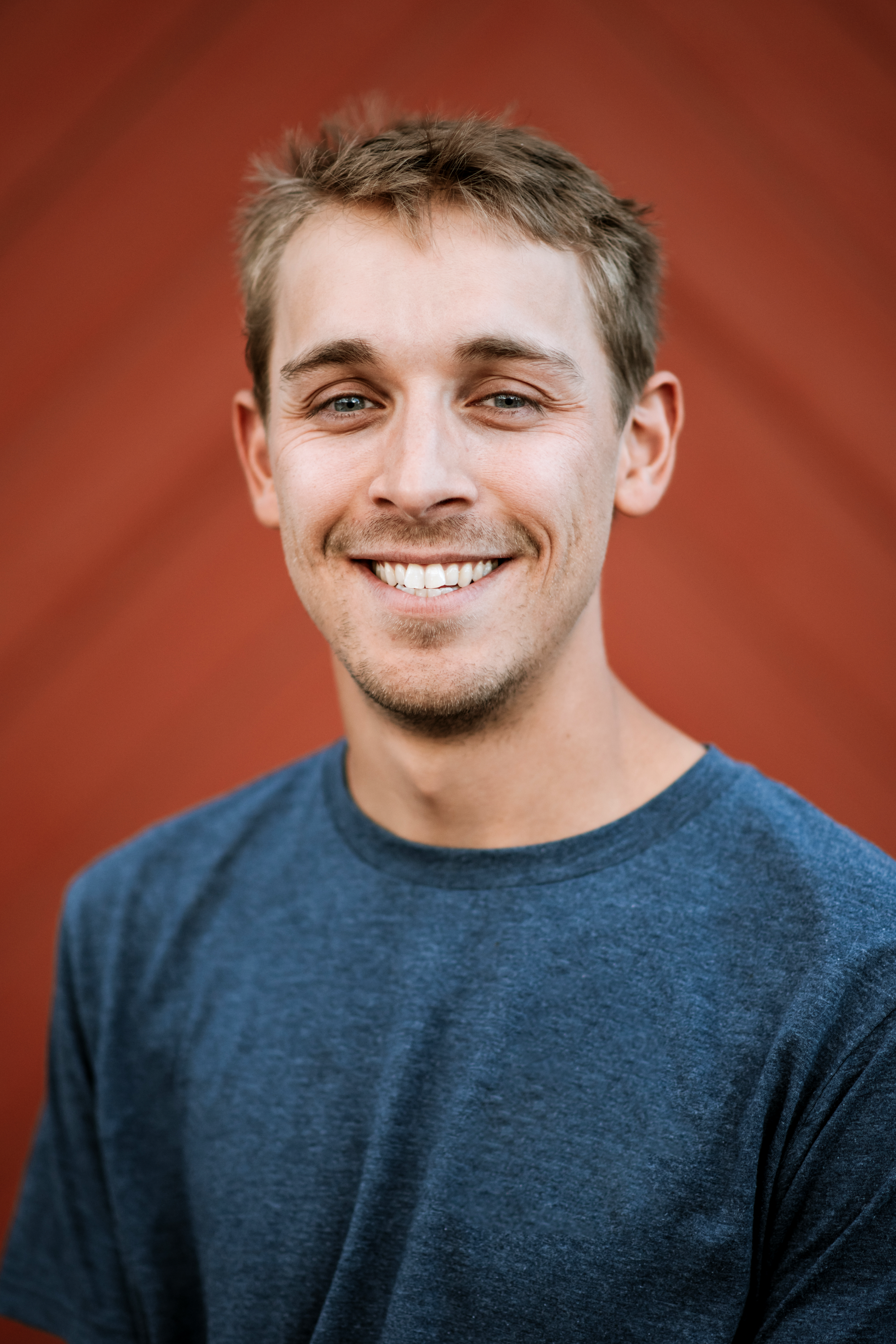
Nicholas Ward has long been fascinated by the way a skilled storyteller can hold attention, shape emotion, and transform ordinary events into something unforgettable. While he has never considered himself a natural verbal or written storyteller, painting has become his way of entering that tradition. Through images, he constructs narratives that invite wonder, tension, humor, and reflection.
Ward is particularly interested in the relationship between memory and storytelling. He sees memory as fluid rather than fixed—something shaped by time, emotion, repetition, and desire. Stories often evolve through retelling, and what begins as exaggeration can eventually feel inseparable from fact. In this sense, storytelling does not simply preserve the past; it actively reshapes it. His paintings explore the unstable space where recollection, invention, and memory converge, examining how emotion, embellishment, and belief can sometimes preserve an experience more deeply than facts alone.
WORKS ON DISPLAY
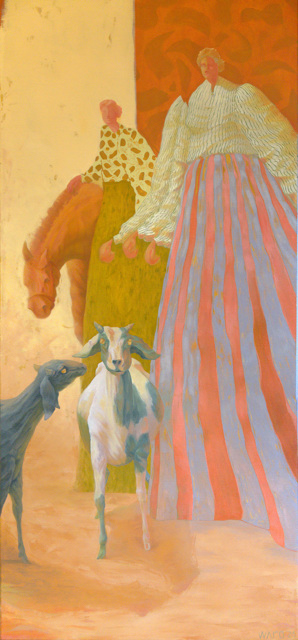
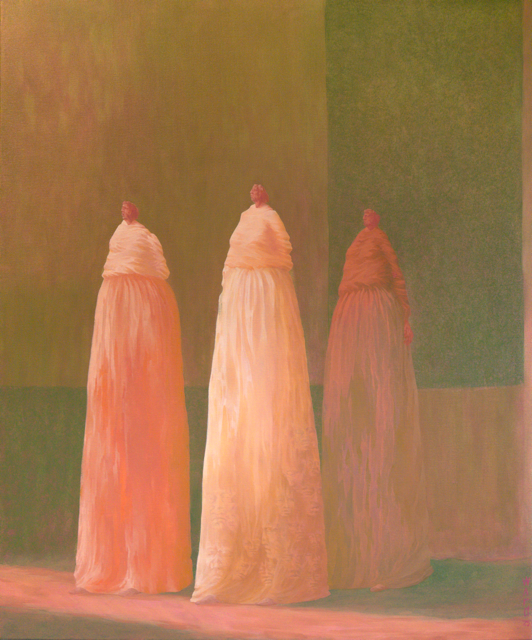
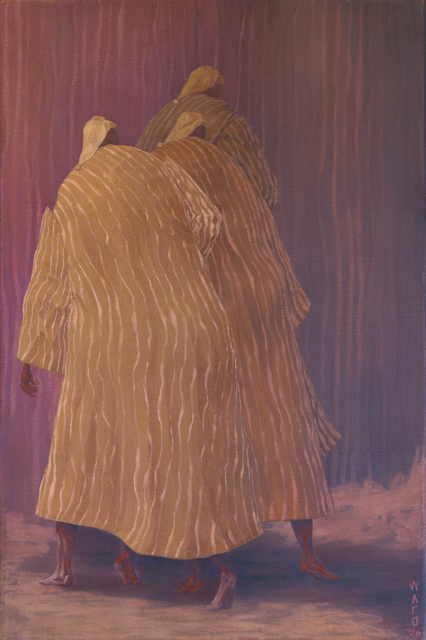
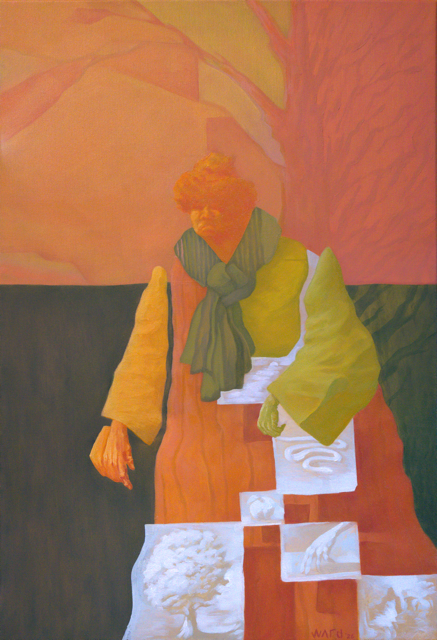
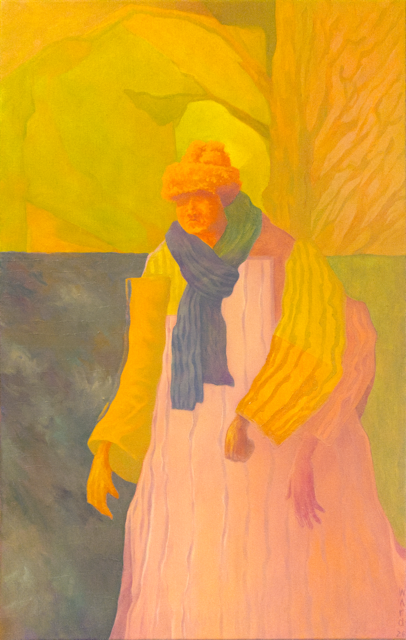
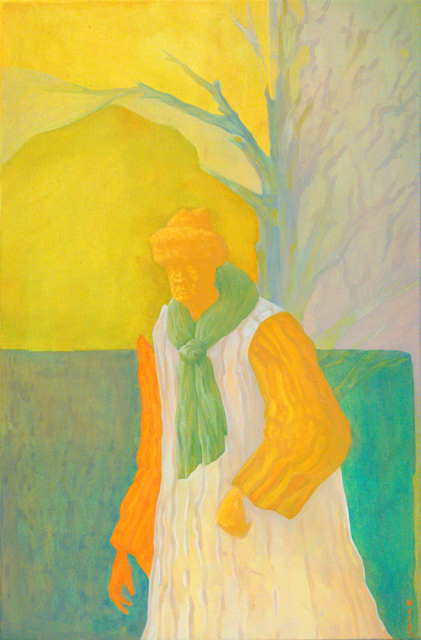
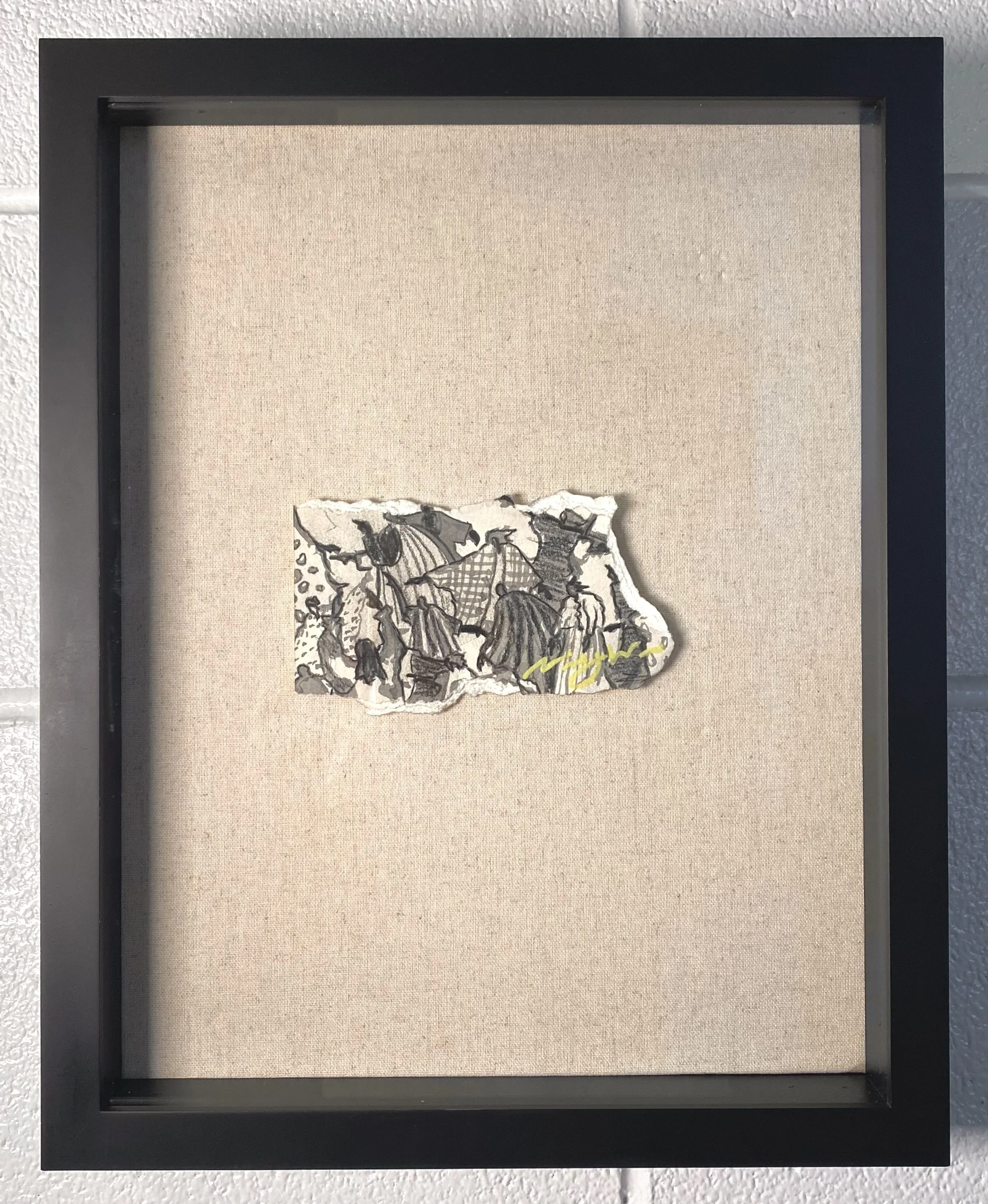
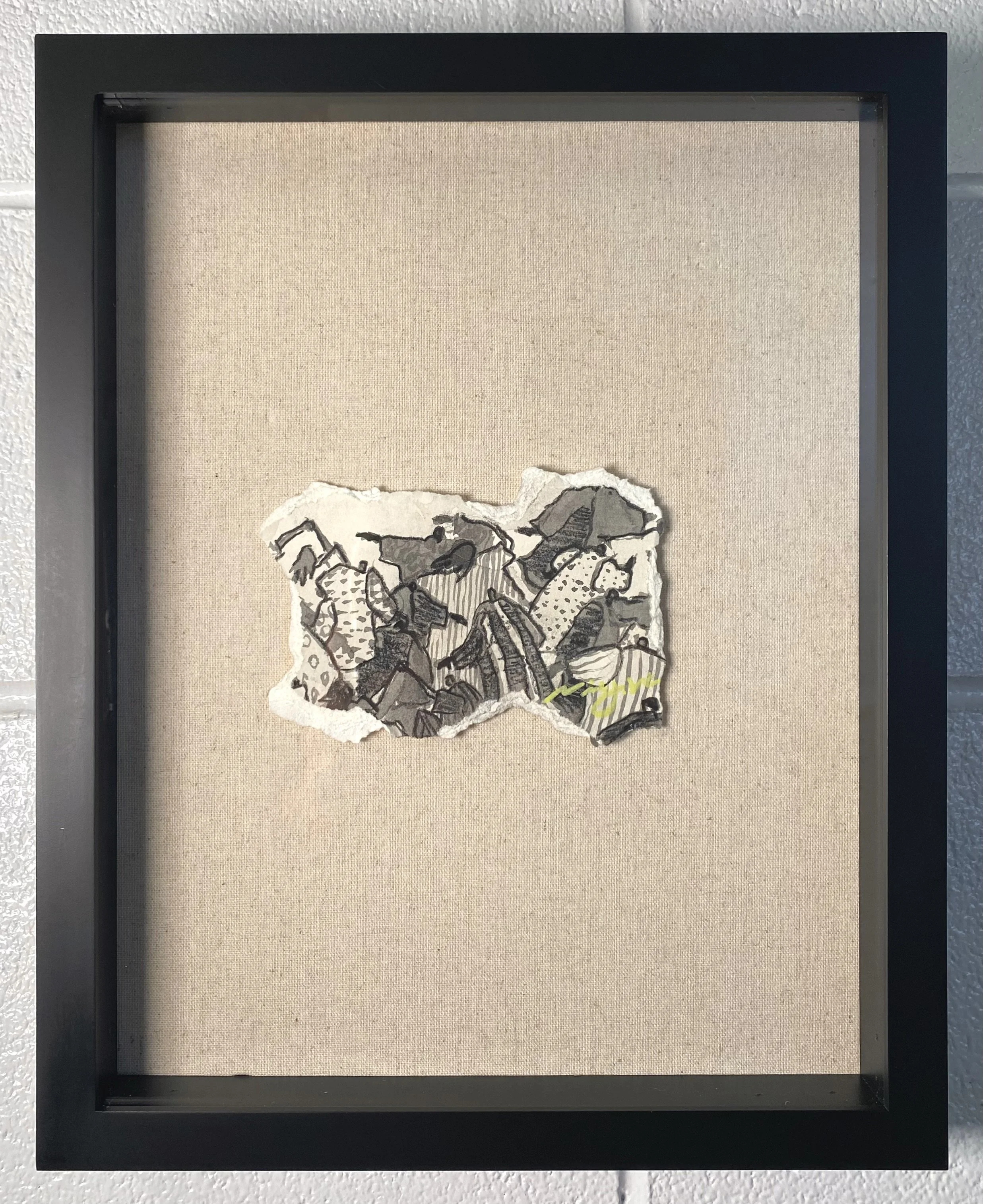
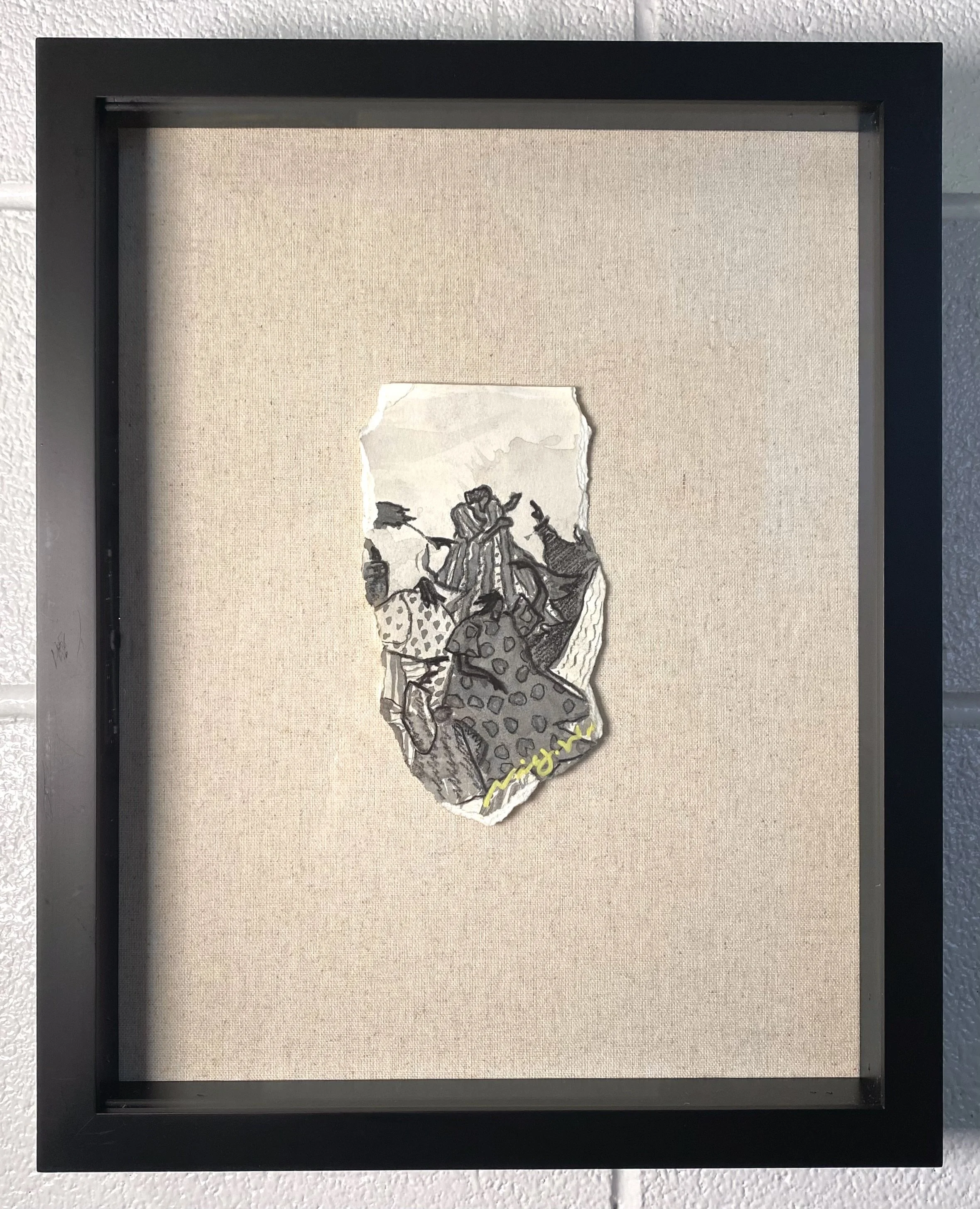
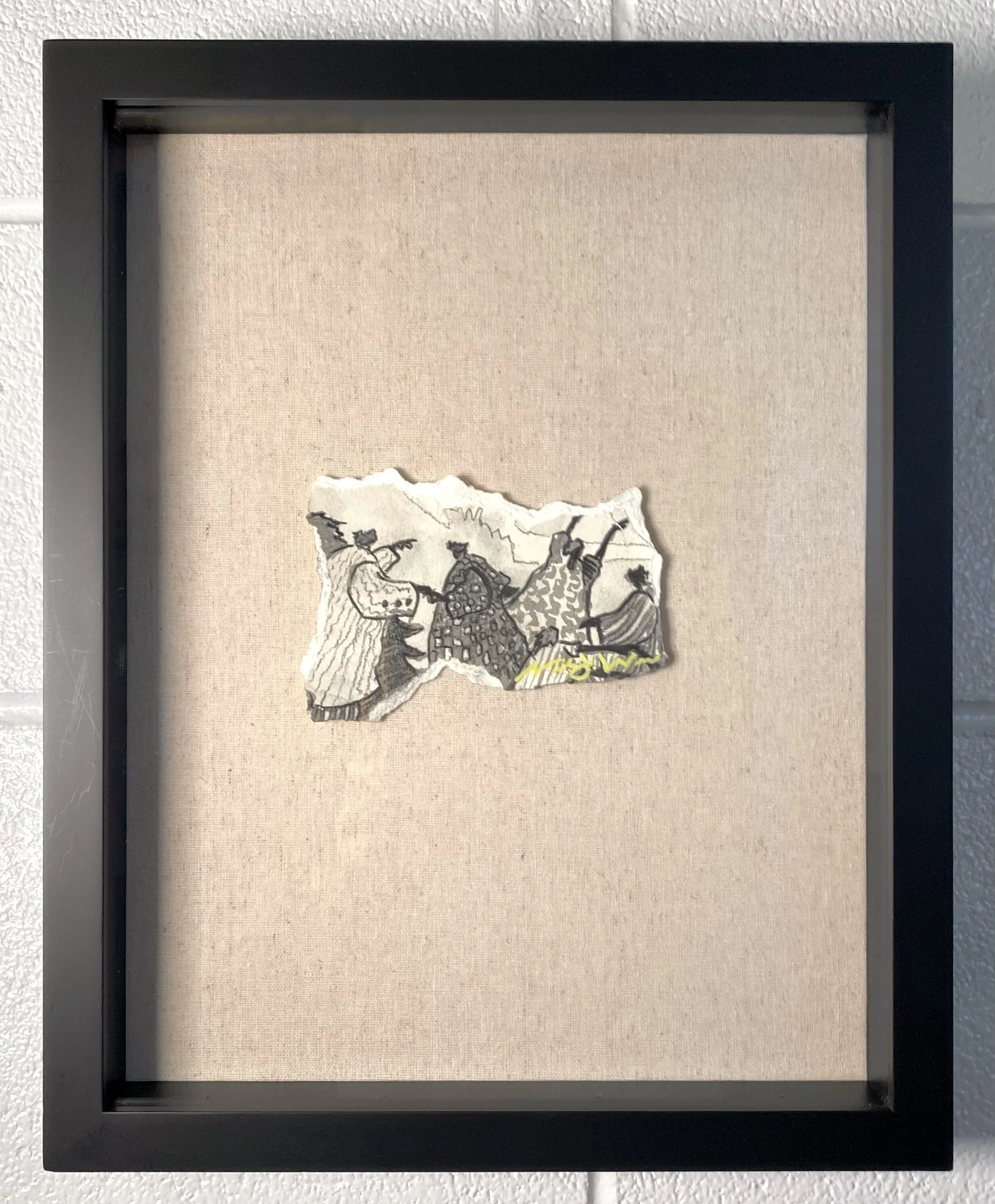
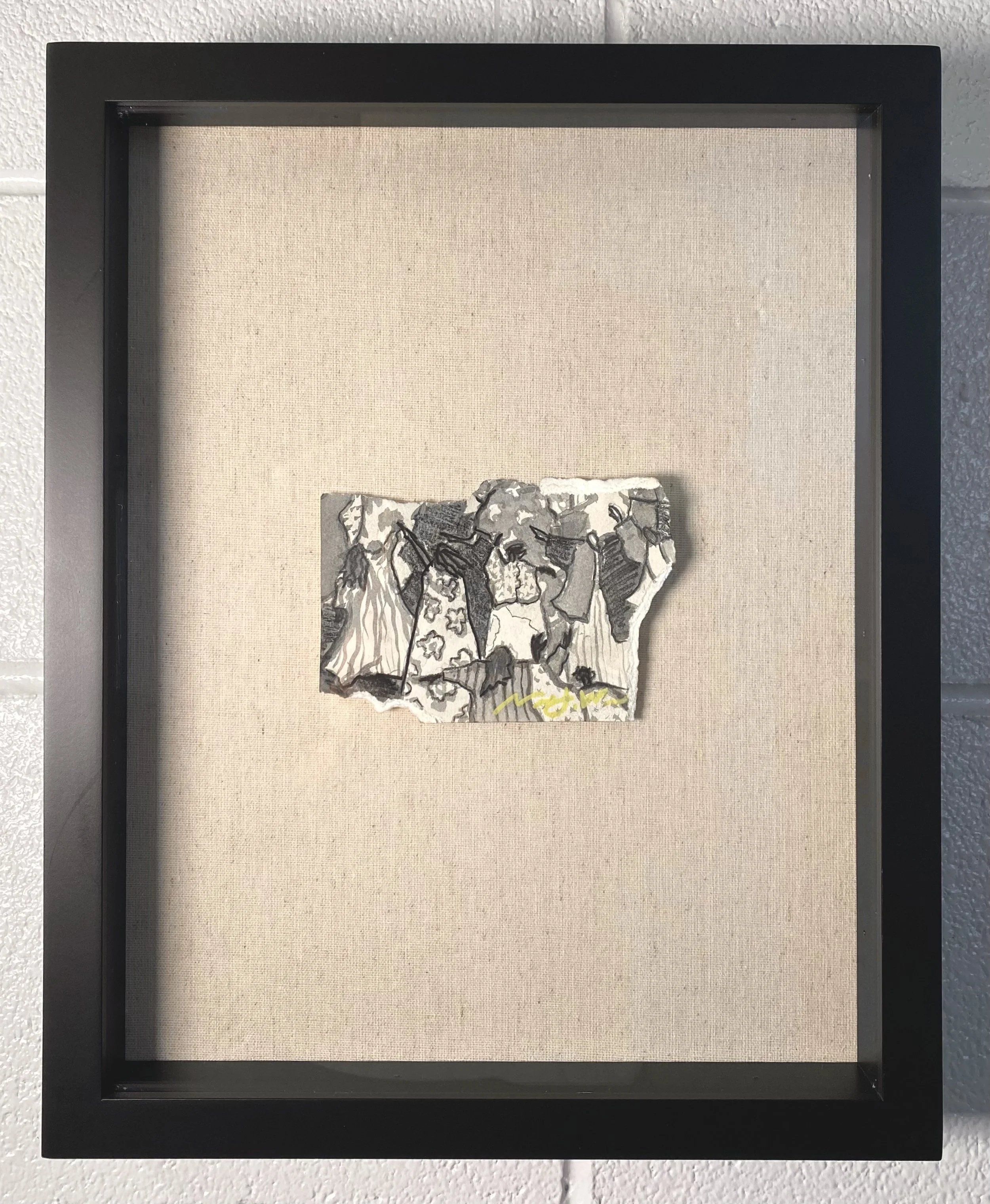
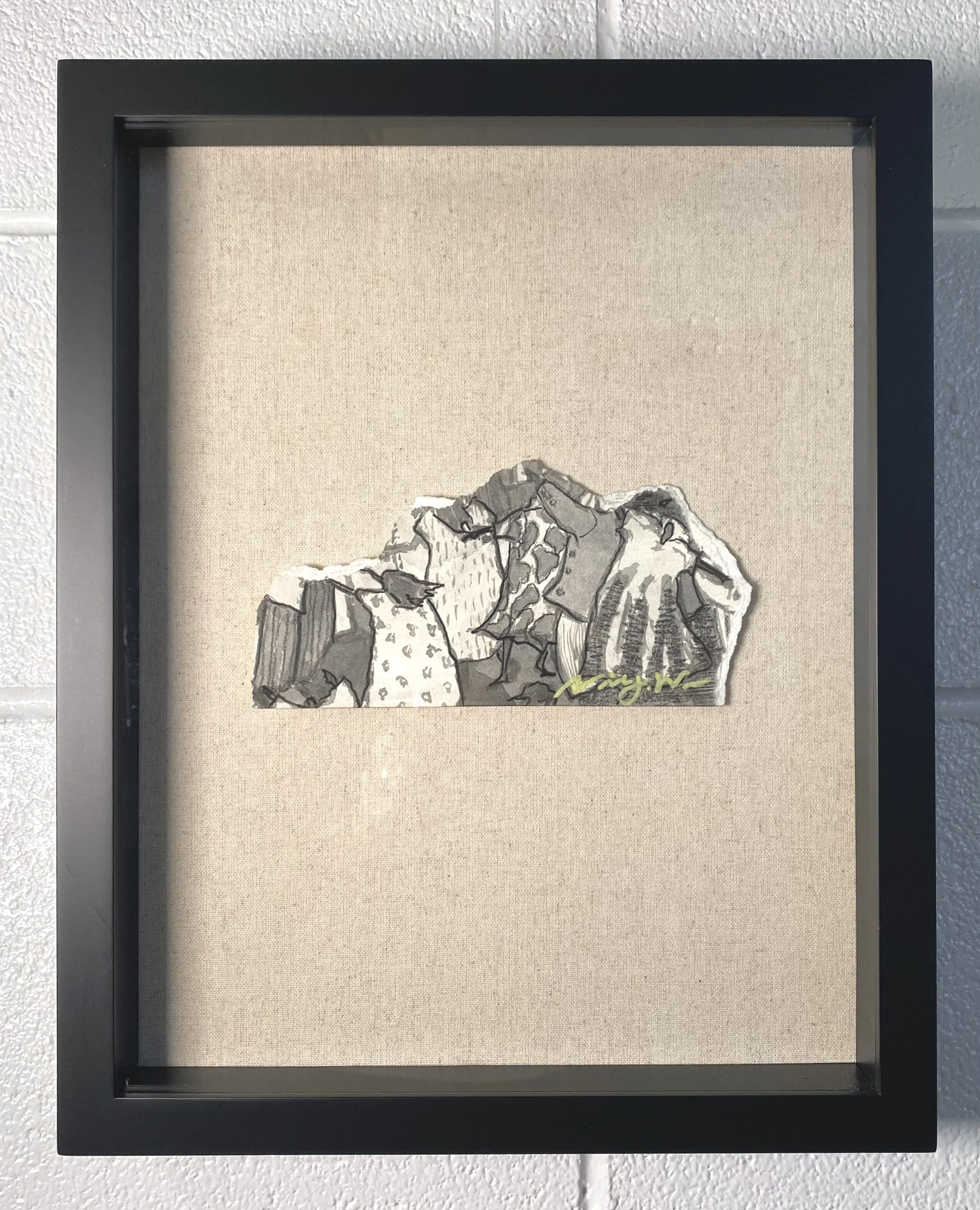
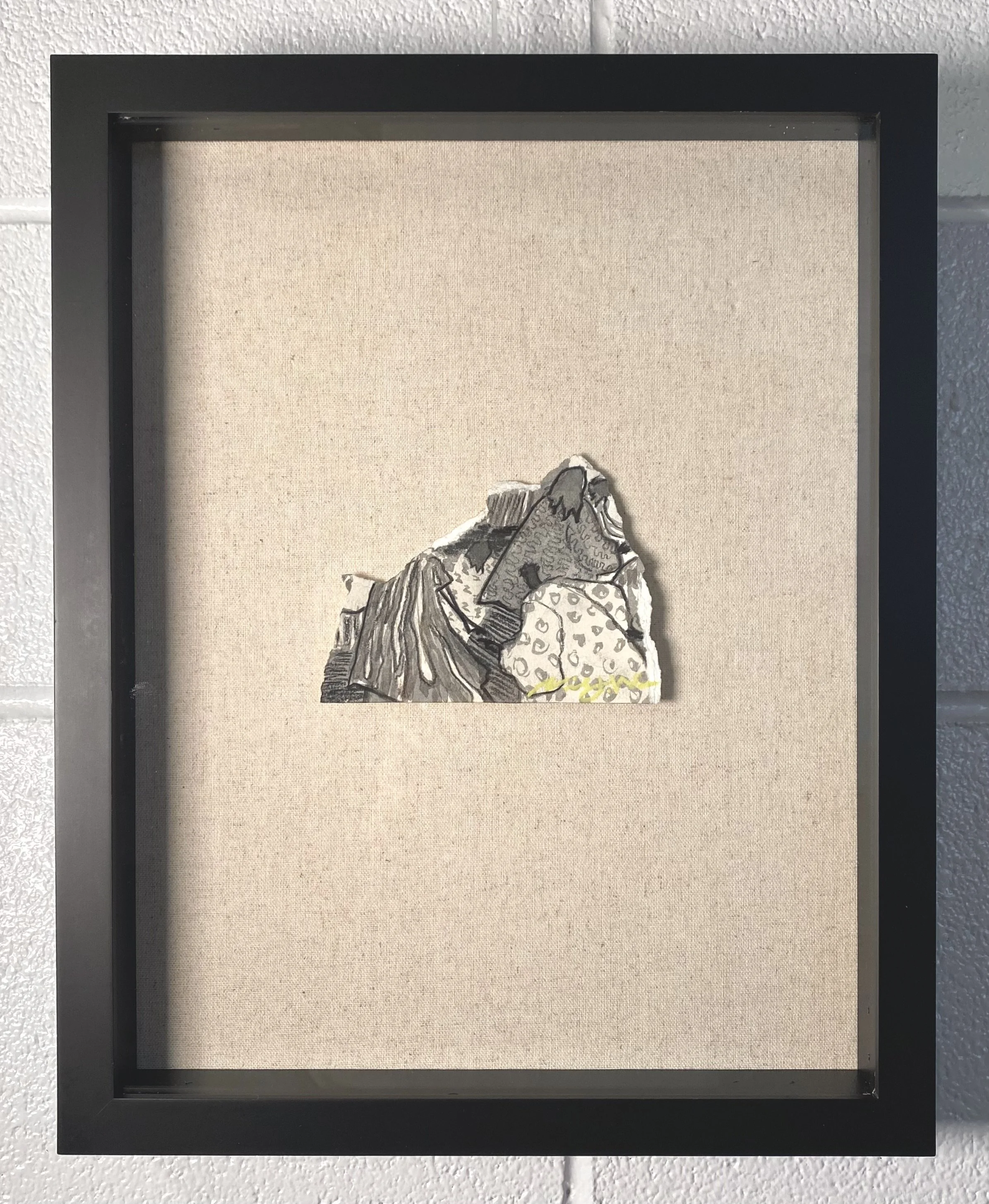
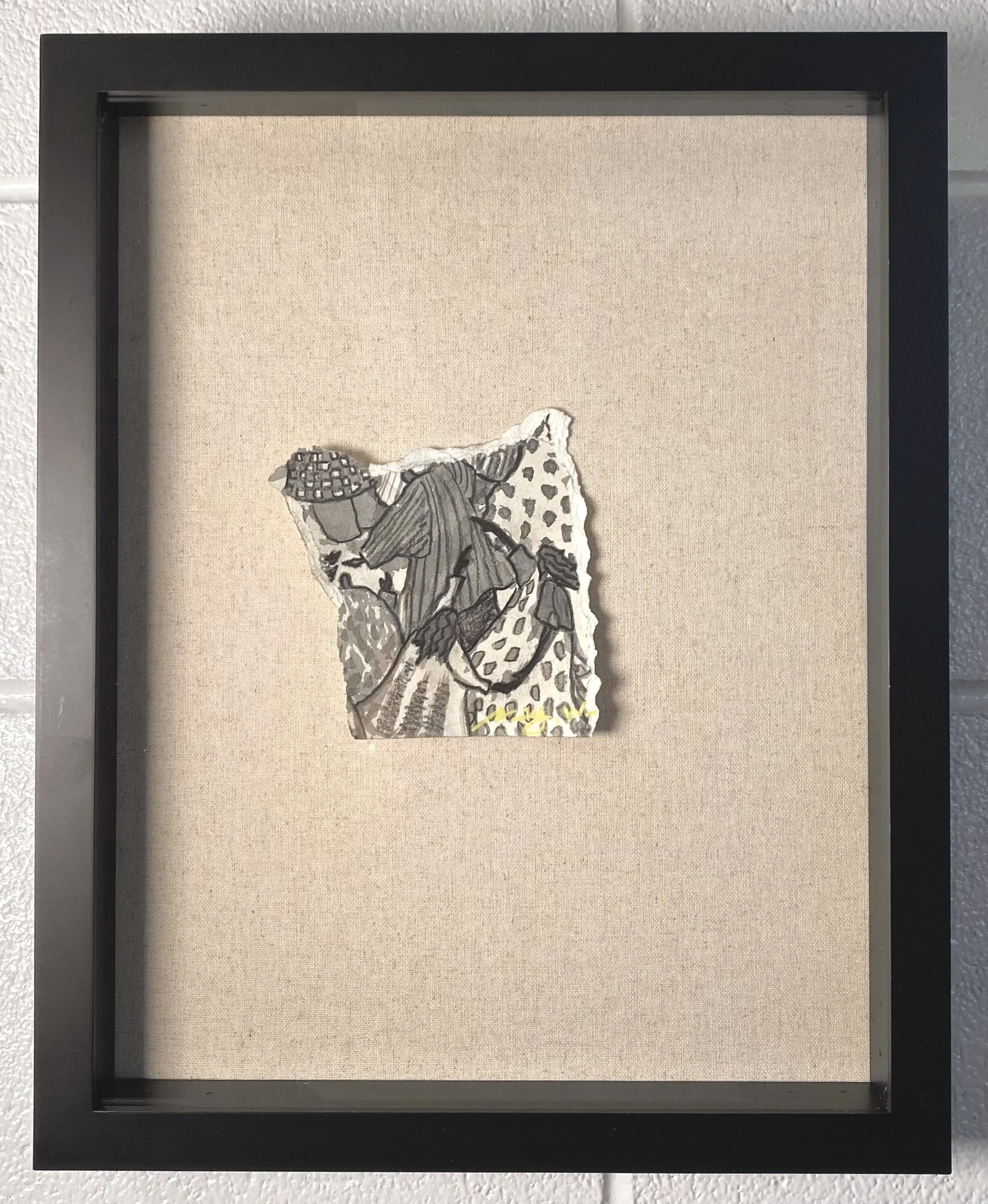
Between the Real
“Between the Real” is an exhibition that began as an exploration of memory, storytelling, and ritual but morphed into my own grappling with life amidst omnipresent, and ever advancing technology. I found myself returning to Arthur C. Clarke’s idea that any sufficiently advanced technology becomes indistinguishable from magic.
I realized the narrative of my work was also connecting with the space between reality and this new frontier of AI magic we live alongside every day. Something that answers faster than understanding encapsulates the awe of a “romantic sublime.” There is an almost spiritual obsession surrounding technology and AI, a kind of reverence for the “god in the computer.” The feeling of interacting with something powerful that cannot quite be fully seen is a wholly unique sensation. At the same time, what still feels most real and meaningful is often the simplest human experiences: attention, ritual, the natural world, and connection to one another.
Amidst this obsession, these deliberate forms of connection with the natural world feel important now more than ever as an anchor. These slow moments, to me, have more gravity, feel more immediate, as if they belong to a different register of reality.
“Between the Real” exists in the liminal space between these conditions. It is my own wrestling with the enchantment of new technology and the speed with which we let it dictate elements of our life, as well as the desire and need for human connection.
2026
Oil on canvas
36.25” x 24”