

Rawn Fulton
Rawn Fulton
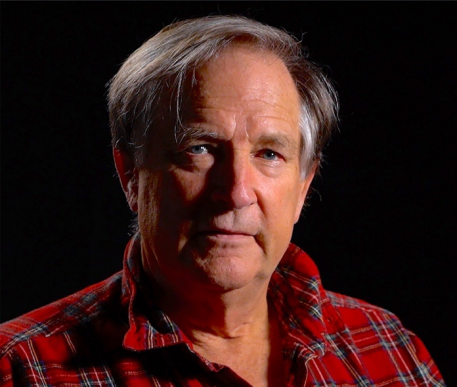
Rawn Fulton is an award-winning filmmaker with extensive production experience. He creates documentaries in many genres. Projects in the arts, biography, corporate communications, education, environment, ethnography, and world affairs take him all over the world.
He enjoys still photography in its many forms – landscape, portraiture, action, family life, abstraction, and mandalic collage. He creates mandalas from his photographs – an art form he’s explored for 50 years.
Educated at Columbia University (B.A., French), with 2 years Peace Corps service with tribal peoples in Maharashtra, India, he speaks 6 languages: English, French, Marathi, Film, Video, and Photography.
WORKS ON DISPLAY
BACH & BUDDHISM
Visual Fugues & Dream Palaces
A mandala is a cosmic diagram that defines a sacred space. Sanskrit for circle, it’s geometric symbols frequently form a square with four gates surrounding a circle with a center point.
Mandalas have been found in cultures all over the world, since the dawn of humanity's attempts at self-expression. Their symmetry harmonizes the symbols within their larger structure, while also generating a surprising dynamism, however simple or complex the overall design.
In Hindu and Buddhist traditions, mandalas emerge from a seeker’s inner spiritual dream journey, with a structural balance that guides and supports a meditative path to enlightenment. I have long been inspired by their design and purpose.
In lieu of traditional geometric symbols, my mandalas place a single photograph in symmetrical juxtaposition with itself. Graphic exploration leads to many surprises, as, when I start, I have no idea how they are going to turn out. The process allows me to find harmony, symmetry, balance, and dynamic delight in the resulting visual dance.
With regard to our theme, BACH & BUDDHISM: Visual Fugues & Dream Palaces, I have loved both realms since childhood, and now, via my mandalas, the two worlds connect. In them I find a visual co-relative of Western music and Eastern meditation – cross-fertilizing Bach fugues with Tibetan self-actualization practices. They express a fugue’s four parts presentation in time – theme, inversion, retrograde, retrograde inversion – as two-dimensional stillness; while also employing the Hindu and Buddhist four-sided square/circle motifs.
Meta-compositions derived from single images, as each mandala is created, the innate balance, harmony, and dynamic symmetry of its source image emerges, revealing a compositional power that tends to go unnoticed when the image is seen only by itself.
My mandalas do not attempt to precisely mirror these two worlds. Rather they are inspired by each, dwell somewhere in the space between, and seek to provide an artistic conduit to a domain beyond both.